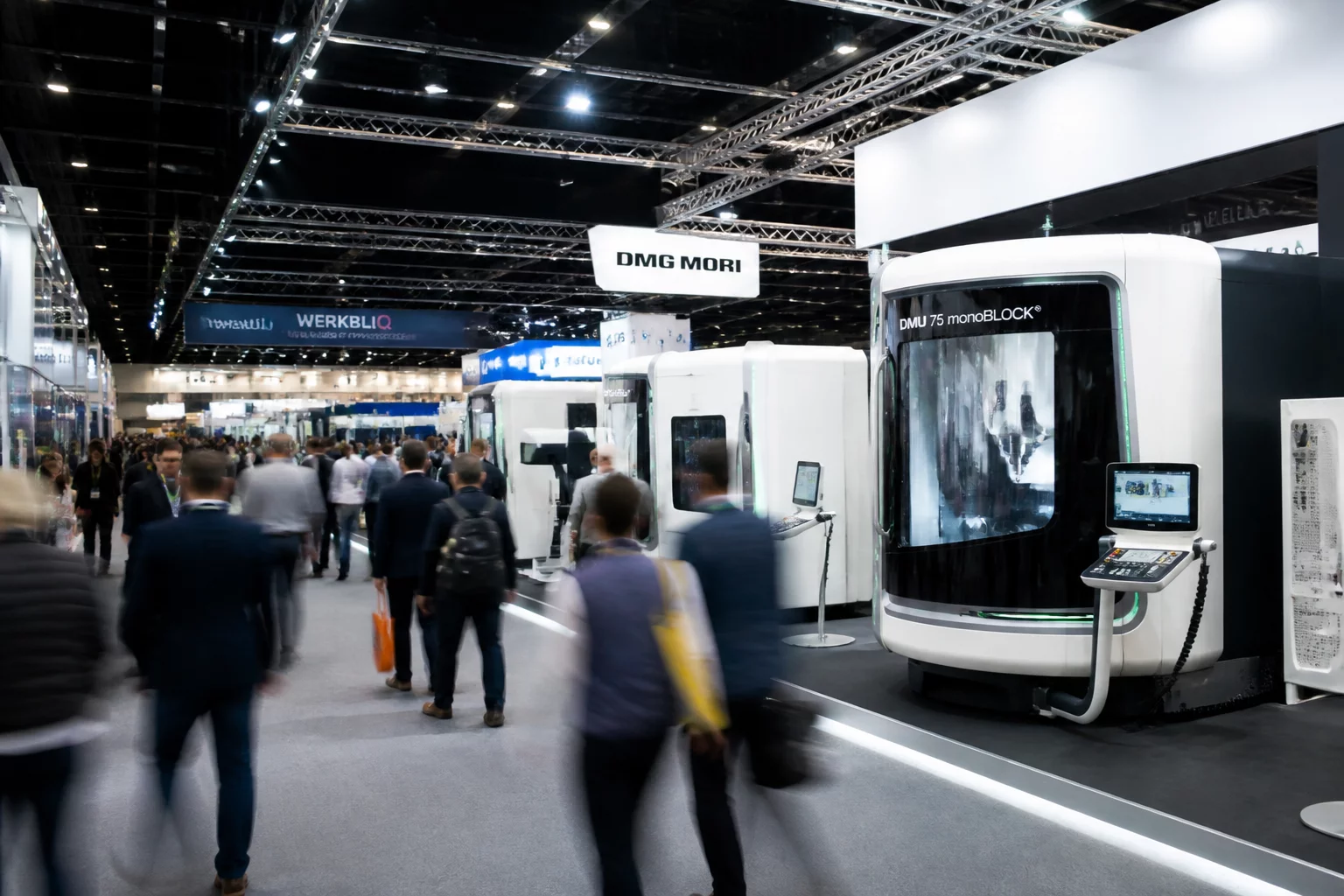
RAPID TCT 2026 solidified the industry's focus on the "consistency problem." As additive manufacturing matures, the conversation has pivoted from the novelty of printing to the necessity of repeatability across large serial batches. Our field analysis at the event revealed that while hardware speeds are plateauing, the sophistication of monitoring software is accelerating. We engaged with dozens of lead engineers who emphasized that the true cost of AM today lies in the uncertainty of batch results, prompting a massive wave of innovation in closed-loop feedback systems and real-time defect detection.
Technical Observation Summary
One of the most significant observations was the integration of spectral analysis within the build chamber. Rather than relying on simple visual sensors, new systems are using multi-wavelength cameras to detect microscopic deviations in the melt pool. This level of granular data allows teams to establish a "normal" baseline for a specific material-machine combination. By identifying these patterns early, manufacturers can stop a build the moment a deviation exceeds the statistical control limits, effectively saving thousands in wasted material and machine time.
Unique Evidence Frame #26: Rapid Tct 2026 Highlights On Consistency
- Closed-Loop Feedback Integration: Real-time adjustment of print parameters based on live sensor data.
- Spectral Melt-Pool Monitoring: High-frequency detection of thermal anomalies at the layer level.
- Standardized Data Interoperability: Movement toward universal log-file formats for cross-machine comparison.
Ultimately, RAPID TCT 2026 highlighted that consistency is achieved through a combination of hardware stability and data intelligence. The vendors who stood out were those offering tools to visualize deviation across a timeline of production. For quality managers, the challenge is no longer finding the needle in the haystack—it is understanding how the haystack itself changes from Tuesday to Wednesday. By leveraging the new generation of batch-centric analytics, teams can finally move toward a state where the tenth part is indistinguishable from the thousandth, turning additive manufacturing into a truly predictable industrial process.
Case Discussion (0)
No technical observations have been shared for this report yet. Be the first to start the discussion.
Leave a technical response