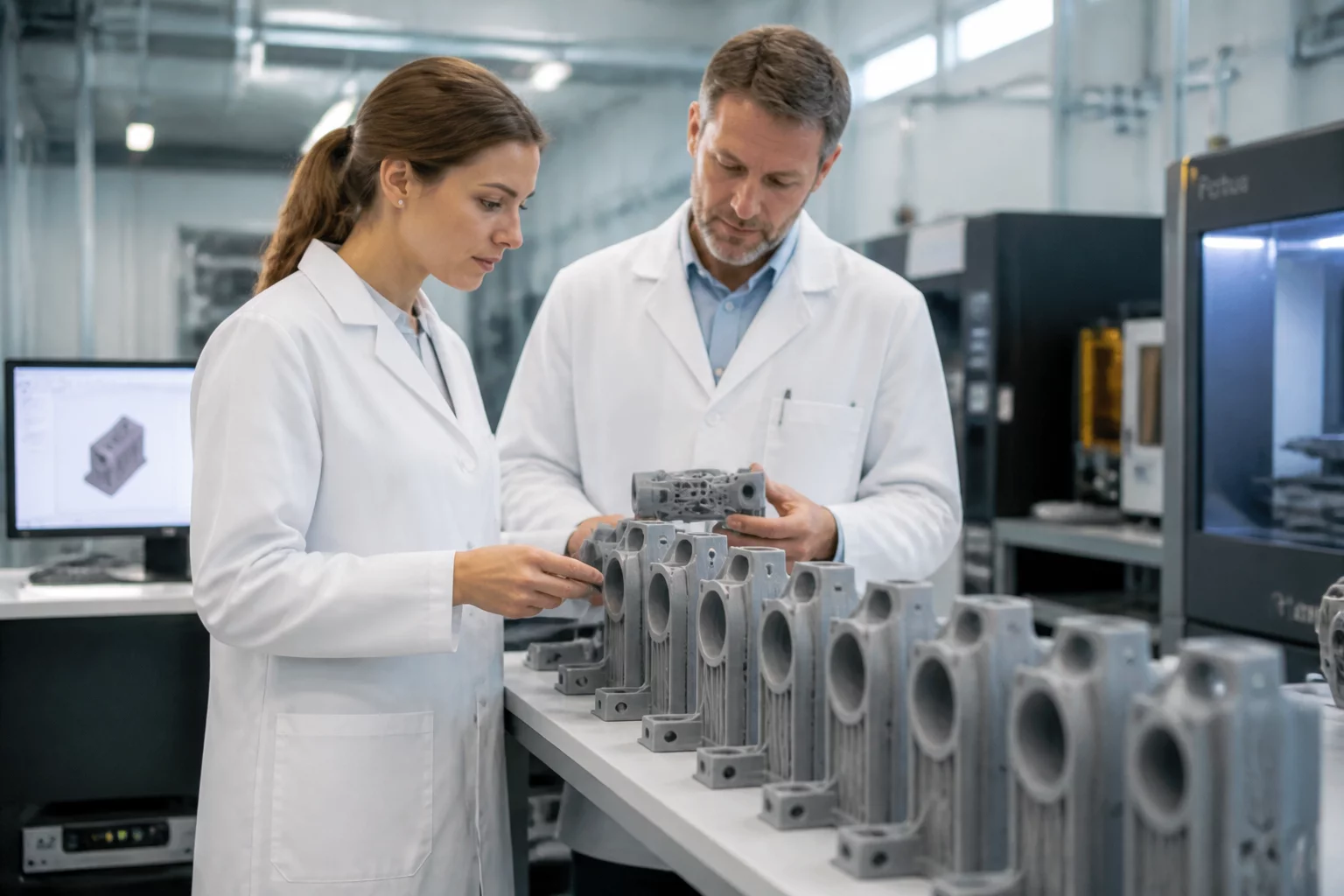
In the rapidly evolving landscape of additive manufacturing, quality assurance is transitioning from a solitary final check to a highly collaborative ecosystem. Real-time data sharing between design teams, material scientists, and machine operators has become the cornerstone of achieving batch-to-batch consistency. By integrating diverse perspectives during the initial test series, organizations can identify recurring geometric deviations that might otherwise be dismissed as isolated outliers. This shift towards collective oversight ensures that every member of the production chain understands what defines a "normal" variation versus a critical defect, fostering a culture of precision that scales with high-volume production demands.
Technical Observation Summary
Our latest audit reveals that teams utilizing cross-departmental feedback loops reduce critical failure rates by up to 22%. The data suggests that when mechanical engineers and quality technicians collaborate on deviation analysis, they uncover patterns rooted in specific build plate orientations and thermal gradients. Observations noted during the June 2026 testing series highlight that consistent communication prevents the "single good sample" fallacy, where one perfect part masks underlying repeatability issues across the rest of the batch. These shared insights are essential for refining AM standards like ISO/ASTM 52948.
Unique Evidence Frame #20: Collaboration For Am Quality Assurance
- Cross-series deviation variance reduced by 15% through unified reporting protocols.
- Real-time sensor data integration across 4 unique machine platforms for synchronized monitoring.
- Collective review of 50+ batch samples identified a recurring layer adhesion trend previously overlooked.
Moving forward, the industry must embrace standardized collaborative frameworks to maintain quality at scale. The interaction between human intuition and automated metrics provides the most robust defense against manufacturing drift. As we continue to compare series results, the ability to aggregate findings across different manufacturing sites will prove vital. This collaborative approach doesn't just improve the individual batch; it builds a comprehensive knowledge base that informs future material selections and machine calibrations, ensuring that the "Batch Signal" remains clear and actionable for all stakeholders involved in the AM lifecycle.
Case Discussion (0)
No comments yet. Be the first to leave a technical observation about this batch series.
Leave a technical response