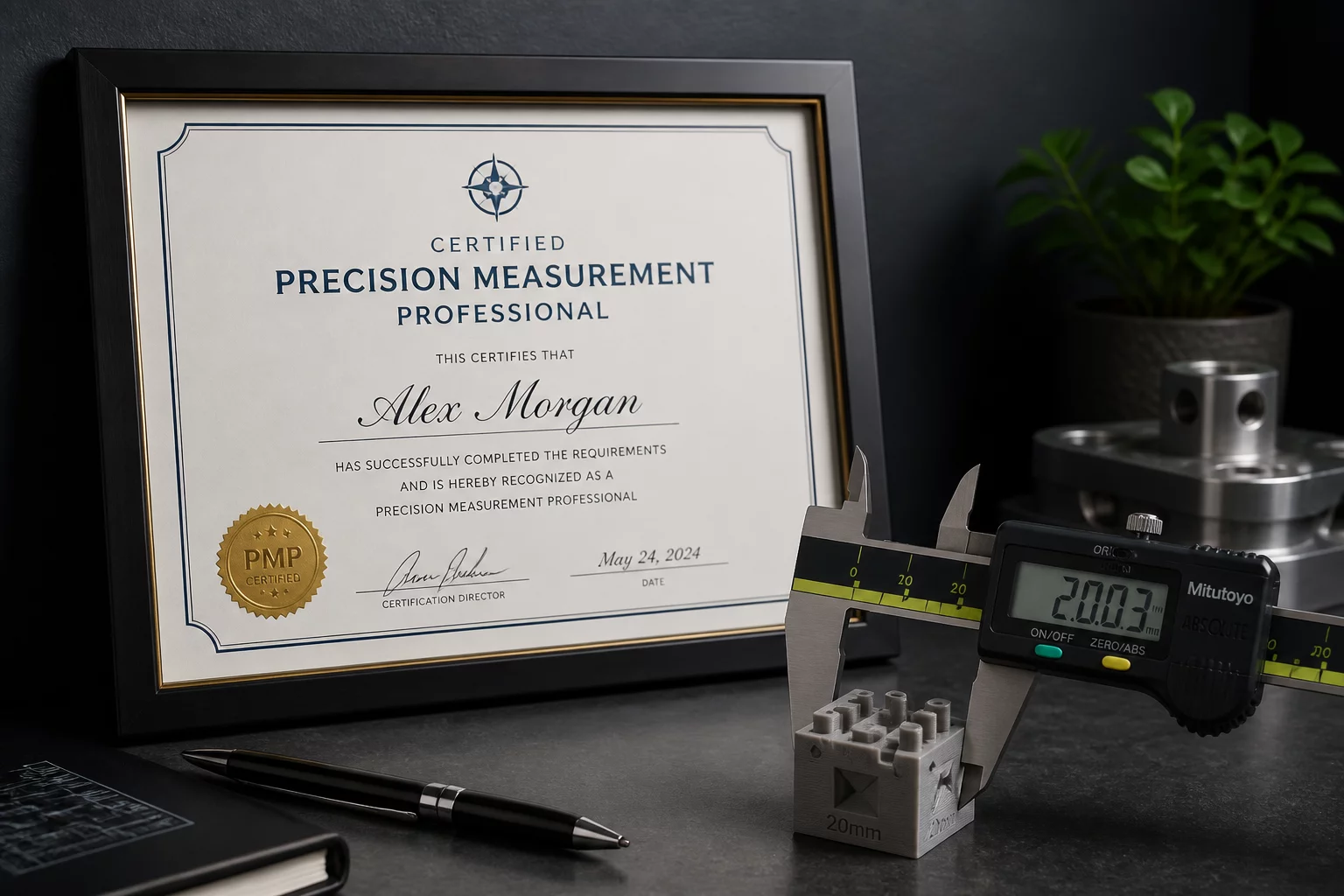
The transition from prototyping to industrial-scale serial production in additive manufacturing necessitates a rigorous approach to quality assurance. The 2026 ASTM Certificate Course on Quality Assurance serves as a cornerstone for engineers aiming to master the complexities of batch consistency. It moves beyond the validation of single successful samples and focuses on the underlying patterns of variance that appear across multi-part print runs. By learning to identify these recurring signals, participants can distinguish between random noise and systemic mechanical drifts.
Technical Observation Summary
Recent sessions of the course highlighted that surface quality and dimensional tolerances often follow predictable spatial patterns within a build chamber. In both polymer and metal systems, the course emphasizes statistical methods to detect drifts in machine calibration before they result in catastrophic batch failures. Engineers are trained to analyze the relationship between build orientation, powder bed temperature, and the resulting mechanical properties, ensuring that every unit in a serial batch meets the same strict standards.
Unique Evidence Frame #18: Astm Certificate Course On Quality Assurance
- Statistical Process Control (SPC) for 100+ part serial batches.
- Spatial variance mapping within large-scale build chambers.
- Standardized compliance reporting based on ISO/ASTM 52900.
Adopting these certification standards allows manufacturing teams to implement a robust feedback loop. This involves monitoring real-time sensor data and comparing it against post-print batch metrics to refine slicing strategies. As the industry moves toward higher automation, understanding the nuance of batch signals becomes the primary differentiator between experimental workshops and certified production facilities. This methodology ensures long-term reliability for end-use parts in aerospace, medical, and industrial sectors.
Case Discussion (0)
This could be your first comment. Share your technical perspective on AM quality assurance below.
Leave a technical response