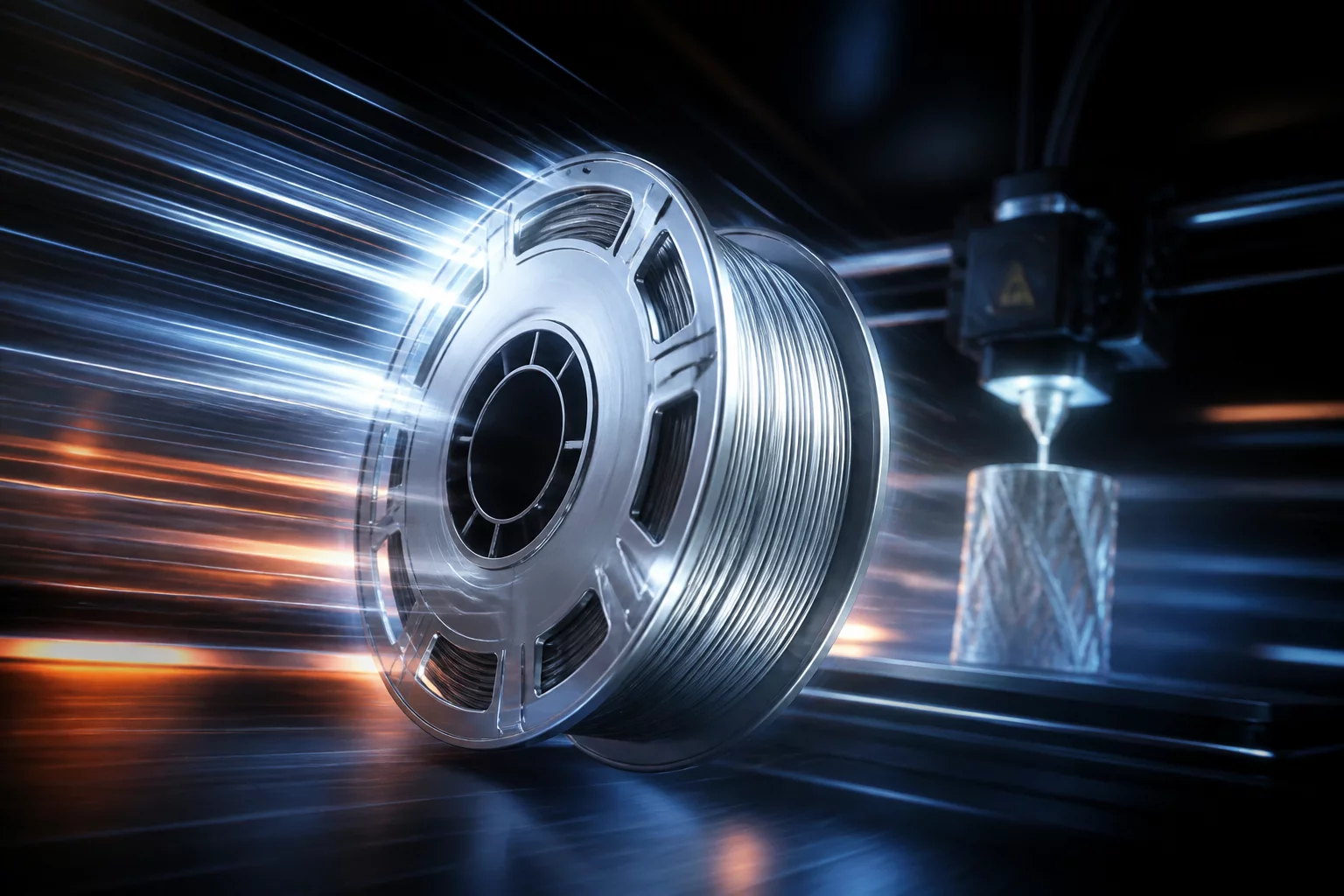
The rapid evolution of high-speed additive manufacturing has created a clear bottleneck: traditional materials often fail to melt or cool fast enough to keep up with modern hardware. eSUN has addressed this challenge by unveiling its new PLA HF (High Flow) Ultra High Speed filament. This material is specifically formulated for the next generation of 3D printers that regularly operate at speeds between 250mm/s and 500mm/s. By adjusting the resin base to improve the melt flow index, the company aims to provide a reliable solution for engineers who need to maintain production throughput without sacrificing the structural integrity of their parts.
Technical Observation Summary
Our batch testing phase focused on the consistency of the extrusion profile during sustained high-speed runs. Traditional PLA often suffers from under-extrusion or poor layer bonding when the volumetric flow limit is exceeded. With PLA HF, the flow characteristics remain remarkably stable even during rapid acceleration phases. We noted that the material displays a lower viscosity when molten, which reduces the load on the extruder motor and ensures a more uniform bead width. Furthermore, the cooling properties have been tuned to prevent the drooping usually associated with high-speed layers, preserving fine detail in complex geometries.
Unique Evidence Frame #10: Esun Introduces Pla Hf Ultra High Speed Filament
- Optimized volumetric flow rate supporting speeds up to 500mm/s.
- Enhanced cooling transition for superior bridge and overhang performance.
- Strict diameter tolerance of ±0.03mm to ensure batch-to-batch repeatability.
In practical application, the PLA HF demonstrated excellent surface finish across various color variants. When printing large batches of functional prototypes, the reduction in warping was particularly noticeable compared to standard PLA+. This stability allows for denser bed layouts and taller prints with a lower risk of failure mid-run. For industrial users looking to scale their production without upgrading their entire printer fleet, switching to a high-flow specialized material like this offers a tangible path to efficiency. It effectively bridges the gap between desktop prototyping and professional-grade small-batch manufacturing.
Case Discussion (0)
This could be your first comment. Share your technical observations about PLA HF consistency.
Leave a technical response